Business
How Can Brands Use Stories to Strengthen Online Visibility?
by Admin
-
Wednesday, August 19, 2026
267 Views
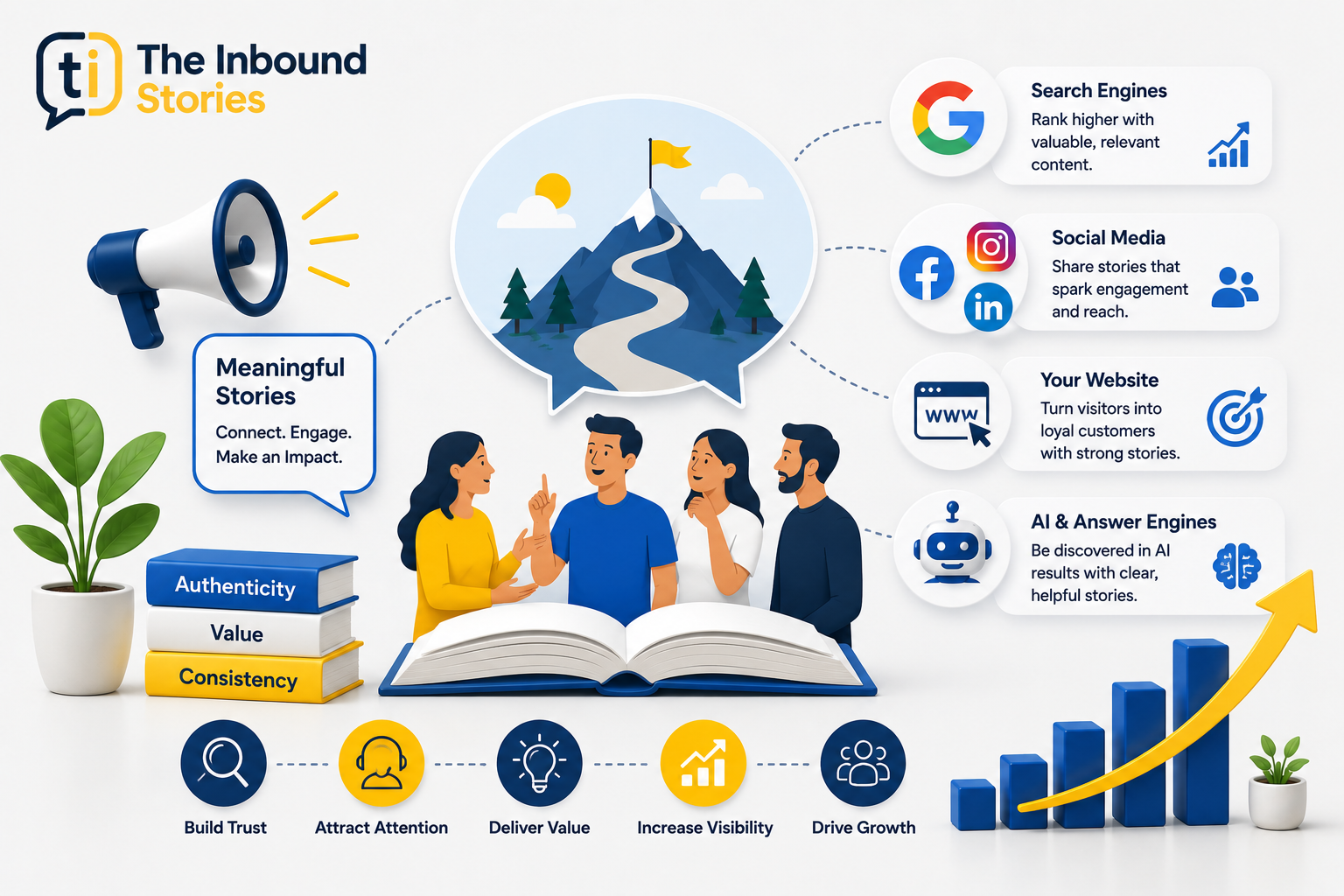
Online visibility is no longer achieved simply by publishing content and adding keywords to web pages. Brands compete for attention across search engines, social platforms, websites, AI-powered search experiences, and other digital channels. To stand out, businesses need content that is useful, recognizable, and worth remembering.
Storytelling can help achieve that goal. A well-developed brand story gives audiences context, communicates expertise, and makes information easier to connect with. When storytelling is combined with search intent, SEO, valuable insights, and consistent publishing, it can become a practical tool for strengthening online visibility.
The Inbound Stories provides a useful direction for brands looking to connect storytelling with a broader inbound content strategy.
Why Stories Matter for Online Visibility
People encounter an enormous amount of digital content every day. A standard promotional message may communicate what a business sells, but it does not always explain why customers should care.
Stories provide context.
A brand can explain the challenge that led to a product, describe how a service solved a customer problem, share lessons from an industry experience, or demonstrate how its approach differs from competitors.
This makes information more relatable and memorable.
Storytelling should not mean turning every page into a dramatic narrative. The purpose is to make useful information easier to understand while giving audiences a meaningful reason to engage with the brand.
Start With the Audience’s Real Problems
Effective brand storytelling begins with the audience rather than the company.
Identify the problems customers experience before they discover your business. Consider their questions, frustrations, goals, concerns, and decision-making factors.
For example, instead of writing a generic article about website optimization, a marketing company could tell the story of a business that receives website visitors but struggles to turn those visitors into inquiries. The article can then explain the causes of the problem and provide practical solutions.
This approach combines narrative with useful information.
Before creating a story-driven piece, ask:
- What problem does the audience want to solve?
- What information are they searching for?
- What questions might they have next?
- What experience can the brand contribute?
- What useful action should the reader take?
The answers can shape both the story and the SEO strategy.
Connect Storytelling With Search Intent
A compelling story will not strengthen visibility if it does not address what people are searching for.
Search intent should guide the topic and structure.
Informational searches require educational content. Commercial searches often require comparisons, evaluations, or explanations of benefits. Transactional searches may need service information, product details, pricing guidance, or clear next steps.
For example, a company targeting “how to improve local visibility” could create a story around a local business struggling to appear in relevant searches. The narrative introduces the challenge, while the rest of the content explains practical optimization methods.
The story attracts attention, but the useful information satisfies search intent.
Use Stories to Build Topical Authority
Search visibility becomes stronger when a website demonstrates depth around important subjects.
Instead of publishing unrelated stories, develop a series of connected topics. A business specializing in digital marketing might create content around content strategy, SEO, search intent, keyword research, content optimization, local search, and conversion strategy.
Each article can address a specific question while contributing to a larger topic cluster.
Internal links can connect related resources. This creates a clearer content journey for readers and helps establish relationships between subjects across the website.
A story-driven content strategy should therefore be organized around themes rather than isolated publishing ideas.
Add First-Hand Expertise
One of the strongest ways to make brand stories valuable is to include genuine experience.
Generic information can be found almost everywhere. Original observations can make content more distinctive.
Brands can share:
- Lessons learned from projects
- Common customer questions
- Industry-specific challenges
- Practical processes
- Expert recommendations
- Case study insights
- Mistakes and solutions
- Original research or data
The key is authenticity. Businesses should avoid inventing customer experiences or making unsupported claims.
When a story reflects genuine expertise, it can strengthen credibility while giving readers information they cannot easily find elsewhere.
Make Stories Search-Friendly
Storytelling and SEO should work together.
Use descriptive page titles, H2 and H3 headings, concise paragraphs, relevant keywords, internal links, descriptive anchor text, and clear introductions.
Do not force keywords into the narrative. Instead, use them where they naturally describe the topic.
For example, a story about improving online visibility could naturally discuss organic search, content marketing, keyword research, search rankings, audience engagement, and conversion opportunities.
This provides semantic context while keeping the writing natural.
Optimize Stories for AEO and GEO
Search is increasingly influenced by answer engines and generative AI experiences. Brands should make their stories easy to understand and extract useful information from.
Start sections with direct answers to relevant questions. Follow those answers with supporting explanations, examples, and practical recommendations.
Question-based headings can also make the structure clearer.
For example:
How Does Storytelling Improve Brand Visibility?
Storytelling can improve brand visibility by making content more engaging, memorable, relevant, and distinctive. When stories are aligned with search intent and supported by useful information, they can contribute to a stronger content strategy.
This direct-answer format helps readers quickly understand the main point while providing additional context below it.
Repurpose Stories Across Digital Channels
A strong brand story does not have to appear in only one format.
A detailed website article can become a series of social posts, a short video script, an email topic, an infographic, a case study, or a frequently asked question.
Repurposing allows businesses to communicate the same core idea in formats suited to different audiences.
However, avoid copying the exact same content everywhere. Adapt the message to the platform and audience while preserving the central insight.
This creates more opportunities for people to encounter the brand across digital channels.
Use Stories to Encourage Brand Searches
Strong storytelling can help people remember a business name, perspective, or unique approach.
When audiences repeatedly encounter useful and distinctive content, they may become more familiar with the brand and eventually search for it directly.
This is especially valuable for businesses operating in competitive industries where many companies offer similar services.
A recognizable voice, consistent themes, original insights, and useful stories can help create stronger brand associations over time.
Turn Visibility Into Engagement
Getting discovered is only the first step. Once visitors arrive, brands need to give them a reason to continue.
Use relevant internal links to guide visitors toward deeper resources. Include clear calls to action where appropriate. Offer related guides, service information, case studies, or consultation options.
The next step should feel natural.
For example, someone reading an educational article may want another guide. Someone researching a business solution may be ready to contact the company.
A good content journey connects these stages without relying on aggressive sales messaging.
Measure Storytelling Performance
Storytelling should be measured like any other content strategy.
Track organic impressions, clicks, rankings, engagement, returning visitors, conversions, leads, and assisted conversions.
Look beyond traffic volume. A page attracting fewer visitors but generating qualified inquiries may be more valuable than a high-traffic article that produces no business results.
Review performance regularly and identify which topics, formats, and storytelling approaches produce the strongest outcomes.
Use those insights to improve future content.
Make Your Brand Story Work Harder
Stories can give brands a more distinctive voice while helping them create useful, search-focused content. The strongest results come when storytelling is supported by search intent, topical authority, original expertise, SEO structure, and consistent optimization.
If your brand has valuable experiences and expertise but needs a stronger way to turn them into search-friendly content, Contact Us to discuss a focused approach to improving your online visibility.
Frequently Asked Questions
How can storytelling improve online visibility?
Storytelling can make brand content more engaging, memorable, relevant, and distinctive. When stories address real audience questions and search intent, they can support broader SEO and content marketing goals.
Does storytelling directly improve search rankings?
Storytelling itself is not a direct ranking factor. However, well-structured stories can help businesses produce useful content that satisfies search intent, demonstrates expertise, and encourages meaningful engagement.
What types of brand stories work best for SEO?
Case studies, customer challenges, expert experiences, problem-solving guides, industry insights, original research, and educational stories can work well when they address genuine audience needs.
Should brands use keywords in storytelling content?
Yes, but keywords should be used naturally. The focus should remain on answering the user’s needs rather than repeating the same phrase unnecessarily.
How can storytelling support AEO and GEO?
Brands can combine storytelling with direct answers, question-based headings, concise definitions, factual information, clear structure, and relevant examples. This makes content easier for answer engines and AI-powered search systems to interpret.
Can small businesses benefit from brand storytelling?
Absolutely. Small businesses can use customer experiences, local knowledge, founder insights, project lessons, and industry expertise to create distinctive content without requiring a large marketing budget.
How often should a brand publish stories?
There is no fixed frequency. Consistency and quality matter more than publishing volume. A realistic schedule that allows sufficient research, optimization, and promotion is usually more sustainable.
How should brands measure storytelling success?
Measure organic visibility, search clicks, engagement, conversions, leads, returning visitors, and assisted conversions. The most important metrics depend on the goal of each story.